Showing posts with label 50-book challenge. Show all posts

1.08.2012

50-book challenge COMPLETE

I finished book number 50 on December 31. Here is the final list.

1. The Sailor Who Fell from Grace with the Sea by Yukio Mishima
2. Room by Emma Donoghue
3. Snow Country by Yasunari Kawabata
4. Guns, Germs and Steel by Jared Diamond
5. The Boy Next Door by Irene Sabatini
6. Lady Chatterley's Lover by D.H. Lawrence
7. Revolutionary Road by Richard Yates
8. The Book of Tea by Kakuro Okazawa
9. Let the Great World Spin by Colum McCann
10. What I Talk About When I Talk About Running by Haruki Murakami
11. Life of Pi by Yann Martel
12. A Wild Sheep Chase by Haruki Murakami
13. The Red Tent by Anita Diamant
14. Rabbit, Run by John Updike
15. Montana 1948 by Larry Watson
16. The Left Hand of Darkness by Ursula K. Le Guin
17. The Alchemist by Paulo Coelho
18. This Side of Paradise by F. Scott Fitzgerald
19. The Sound of Waves by Yukio Mishima
20. Tales of the City by Armistead Maupin
21. Sex and the City by Candace Bushnell
22. East of Eden by John Steinbeck
23. The Hunger Games by Suzanne Collins
24. Gift from the Sea by Anne Morrow Lindbergh
25. Small Gods by Terry Pratchett
26. LIAR by Justine Larbalestier
27. The Time Traveler's Wife by Audrey Niffenegger
28. Catching Fire by Suzanne Collins
29. Slouching Towards Bethlehem by Joan Didion
30. The Old Man and the Sea by Ernest Hemingway
31. The Girl with the Dragon Tattoo by Stieg Larsson
32. The Blue Castle by L.M. Montgomery
33. A Midsummer Night's Dream by William Shakespeare
35. Island beneath the Sea by Isabel Allende
36. Adventures of Huckleberry Finn by Mark Twain
37. The Adventures of Tom Sawyer by Mark Twain
38. The Elements of Style by William Strunk Jr. and E.B. White
39. Holes by Louis Sachar
40. Mockingjay by Suzanne Collins
41. Nick and Norah's Infinite Playlist by Rachel Cohn and David Levithan
42. The Lake by Banana Yoshimoto
43. A Moveable Feast by Ernest Hemingway
44. The Time of Their Lives by Al Silverman
45. Hogfather by Terry Pratchett
46. Notes from Underground by Fyodor Dostoevsky
47. The Niigata Sake Book by the Niigata Sake Brewers Association
48. Things Fall Apart by Chinua Achebe
49. Fahrenheit 451 by Ray Bradbury
50. We Have Always Lived in the Castle by Shirley Jackson

Some statistics:
  • I read a total of 13566 pages
  • 32 were by male authors; 18 were by female authors
  • 27 were by American authors, eight were by Japanese authors, five were by British authors, three were by Canadian authors, two were by African authors (one Nigerian and one Zimbabwean), and one each were by Russian, Swedish, Australian, Brazilian and Irish authors. (Hey, I read at least one book from every continent!)
  • The number of nonwhite authors I read is embarrassingly low. How low depends on what you consider nonwhite, but if we're talking people who actually face oppression (ie not Isabel Allende or Japanese from Japan), then I would count two. Yes, two. Something to focus on this year. 
  • 12 books were translated from other languages (mostly Japanese; also Spanish, Russian, Portuguese, and Swedish); the rest were written in English. 
  • 41 were fiction; 9 were nonfiction
  • 41 were post-1950, five were written between 1900 and 1950, three were written in the 19th century, and one was written in the 17th century
  • 32 were print books; 18 were ebooks
  • I reread 3 books (This Side of Paradise, Adventures of Huckleberry Finn, Fahrenheit 451); the rest were new
  • I read more than one book by the same author in six cases: Mark Twain (2 books), Ernest Hemingway (2 books), Suzanne Collins (3 books), Haruki Murakami (2 books), Yukio Mishima (2 books), and Terry Pratchett (2 books).
  • My favorite books I read this year: Revolutionary Road, A Wild Sheep Chase, The Hunger Games, The Left Hand of Darkness, East of Eden, LIAR, Holes, and We Have Always Lived in the Castle. 
    So that concludes the challenge, I guess. I'm hoping to get back to writing about Japan here; I thought about continuing to blog about the books I'm reading by doing short summaries 5 to a post or so, but instead I think I want to start using Goodreads. One of my favorite parts of doing the book challenge (both this year and when I last did it in 2007) was tracking the books I read and being able to see what the breakdown was at the end of the year on genre, fiction vs. nonfiction, etc. I certainly don't need to read 50 books to do that, but it's the only time I've bothered to, so this year I'll try to keep doing it no matter how few or many books I read. Now that the challenge is over I'm letting myself read all the long books I've been putting off--I'm almost done with The Girl Who Played With Fire (which is fantastic) and next am going to read Nothing to Envy: Ordinary Lives in North Korea. Excitement!

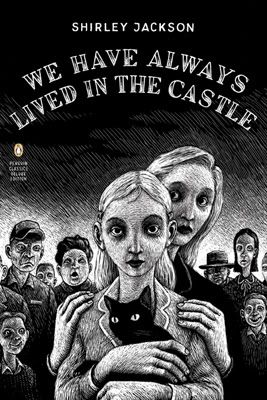
    50. We Have Always Lived in the Castle

    We Have Always Lived in the Castle, Shirley Jackson
    Penguin Books, 169 pages, 1962

    I kind of think of this as the surprise ending to my book challenge. I bought the ebook edition from Green Apple Books back when I first got my Kindle because someone had recommended it on Ask Metafilter, and then I never got around to reading it until finally I found myself on a train to Hiroshima on December 30 with 49 books read and thought "well hell, this one is only 169 pages long." And it ended up being the most original, atmospheric, and imaginative book I've read all year. The story, about two sisters who live with their uncle in a house outside the village after the rest of their family was poisoned to death, is brilliantly creepy. Constance, the older sister, who was accused of murder after the poisoning but eventually acquitted, is agoraphobic and never ventures beyond the garden, but far more unsettling is her obsession with housework and placid refusal to acknowledge any unpleasantness (of which there is plenty in the Blackwood household). When someone complains about her sister Merricat's antisocial behavior, she smiles and offers them a piece of onion pie. Uncle Julian is obsessed with documenting and solving the murders, and babbles on about the topic to anyone who will listen, far beyond the point of decency. However, it's Merricat, the narrator, who's the most disturbing. Eighteen but childish, she shows a slavish devotion to Constance, but imagines everyone else's deaths in graphic detail for offenses like knocking on the door. Despite her magical protections on the household (which resemble OCD more than anything), the Blackwoods' cousin Charles comes to visit, and that's when everything comes tumbling down. I seriously cannot say enough good things about this book--being inside Merricat's world is terrifying in a completely original way.

    1.06.2012

    49. Fahrenheit 451

    Fahrenheit 451, Ray Bradbury
    Del Rey (Ballantine), 1953, 179 pages

    I read this when I was in the 10th grade, and revisiting it was kind of a bummer, because it just wasn't that good. (Well, it did win the National Book Award.) I've always remembered it as one of the best books I was required to read in high school. I can see exactly why it appealed to my 15-year-old self--ornate, overblown language that I considered literary and a clear message that was delivered largely in impassioned speeches by various characters--and those are exactly the reasons I dislike it now. The plot is flimsy, the characters one-dimensional, and the author clearly has an axe to grind. Bradbury also rants (in the book itself and in his various afterwords) about the tyranny of minorities and how objections to works of literature on the grounds of racial/gender/religious sensitivity will be the downfall of aesthetics and society. Which is, you know, real cute, but off-putting. He refers to "women's libbers" in a supplementary interview (also included in the book) that was conducted in 2003, which is just plain embarrassing. The "women's libbers" have a point: the only roles women play in this book are brainwashed wife (Mildred) or non-threatening catalyst (sort of a muse) for the male character's important revelations (Clarisse). I found it especially striking that the nomads at the end of the book, the ones who have memorized various works of literature and now represent the repository of human knowledge in the book-burning era, are all specifically referred to as men. Perhaps Bradbury thought that a mixed-gender nomad camp would provide too many distractions.

    A funny side note: For quite a while, in my support for ebooks as a medium, I had in the back of my mind a moment in Fahrenheit 451 where Faber tells Montag that it's the message that matters, not the medium, and that in fact even the TV parlors could serve the same purpose as literature if they would project "the same infinite detail and awareness." Turns out that Bradbury has refused to allow ebook versions of his books for years, and has only in the past year or so been forced into accepting an ebook deal with the realization that no publisher would renew his print contract without an ebook component. I have as much fondness for the physical components of a book as anyone, and I do think there's a debate to be had about what modern technology has done to our attention spans, but I find most arguments against ebooks to be hopelessly sentimental. A book is so much more than just paper and ink and glue.

    48. Things Fall Apart

    Things Fall Apart, Chinua Achebe
    Anchor Books, 209 pages, 1959

    One funny consequence of my awful procrastination on the 50-book challenge is that to clean up, I ended up reading lots of short but wonderful books that I would never have otherwise gotten around to. Somewhere I had gotten the idea that this book was highbrow, difficult, and maybe a little male-focused (which I tend to find tedious), but it was just the opposite.

    Things Fall Apart is a portrait of Ibo tribal life at the end of the 19th century, and Achebe's plain, rhythmic writing style gives it the power of myth. Although parts of the culture portrayed in the book (such as the custom of leaving twins to die in the forest, or the murder of Okonkwo's adopted son, Ikemefuna, on the order of the village oracle) will seem brutal to modern readers no matter what, it's a far cry from Heart of Darkness*, which Achebe was in part responding to and refuting when he wrote his novel. The top review on Amazon says that Achebe gives the wild, "savage" drumbeats in Heart of Darkness a story and a context, which I think is the main function of the novel--the average American has a backwards view of Africa and its people, but Achebe gives us an intimate look at the customs, traditions, personalities, and daily life in one Ibo village. It's also an interesting look at power and how it affects social change--Okonkwo, the village strong man, upholds customs he finds repellent because he is afraid of appearing weak, while those at the bottom of the social food chain who have nothing to lose are the ones who  most readily join the Christian missionaries when they come and eventually upset the balance of tribal life.

    *Heart of Darkness was saved from earning the title of worst book I was required to read in high school only due to the presence of Lord of the Flies.  Dear Folsom Cordova Unified School District, get with the fucking program. Throwing in The Joy Luck Club and calling it a day does not a female minority perspective make.

    12.28.2011

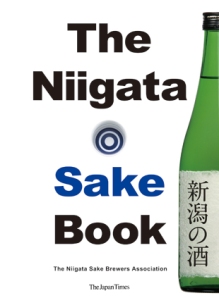
    47. The Niigata Sake Book

    The Niigata Sake Book, The Niigata Sake Brewers Association
    89 pages, The Japan Times, 2008

    Oh man, this was SO DISAPPOINTING. My region is supposed to have the best sake in Japan and I've always wanted to learn more about it, how it's made and the different varieties, so I thought this book would be really interesting. But the translation is total crap--the most irritating thing was the constant use of "gracious" as a way to describe sake flavor (dear translators, just because you are translating between two very different languages does not mean you can just make up new meanings for English words whenever you feel like it), but the whole thing was riddled with unclear statements and bizarre adjectives and "Unnecessary Capitalization and Quotation Marks." The writing style is also intolerably dry and technical, and the book is full of more puffed-up nonsense than actual information. I did manage to glean a little bit of knowledge about the brewing process and different sake classifications, but it wasn't anything that's not in the Wikipedia entry for sake, which is better written to boot. This does make me wonder about what's available in English--I think there's definitely a market for a well-written Sake 101 sort of thing.

    46. Notes from Underground

    Notes from Underground, Fyodor Dostoevsky
    Bantam Books, 153 pages, 1864, translated by Mirra Ginsburg in 1974

    I put off reading this forever and ever and ever because of Dostoevsky's reputation as a dense, difficult, cerebral novelist, but finally the book challenge forced me to give in because it was one of the few short books I had left to read and now I wonder what took me so long.

    I swear to God I read somewhere that the Beat Generation was heavily influenced by Notes from Underground, and now I can't find any reference to it, which is too bad because reading it gave me a new way of approaching the main question I had about On the Road: if Jack Kerouac honestly believes in the Beat way of life (as he seems to), why does it come across as so repugnant? (Or, since he's apparently self-aware enough to realize how destructive it is, why does he believe so fervently in it?) At the time I read it I came to the conclusion that he was just painting a picture of the Beat Generation in the entirety of its glory and despair. In Notes from Underground, though, the underground man prioritizes freedom and self-expression over happiness and well-being, saying that "man, whoever he might be, has always and everywhere preferred to act according to his own wishes rather than according to the dictates of reason and advantage." He goes on to portray base, random, irrational acts as a sort of rebellion against 18th-century ideas of human nature as essentially good and rational, saying that "though [human nature] may be wrong, it's nevertheless alive." I think this is what On the Road is getting at--freedom at any cost; putting authenticity and ecstasy and experience above stability and order and well-being.

    (This is not all I got out of Notes from Underground, by the way--it's just the only thing I can say that somebody else hasn't already said better.)

    12.27.2011

    45. Hogfather

    Hogfather, Terry Pratchett
    Corgi Books (UK), 445 pages, 1996

    I read this on Susi's recommendation after I mentioned to her that I was disappointed with Small Gods, and she was right--it's much better. It wasn't laugh-out-loud funny or anything, but it was fun and inventive and (I think) a much better example than Small Gods of why people love Terry Pratchett so much.

    44. The Time of Their Lives

    The Time of Their Lives, Al Silverman
    St. Martin's Press, 467 pages, 2008

    This history of all the major American publishing houses in the years between World War II and the early 1980s was an impulse buy on Amazon, on a day in L.A. when I had gotten one too many rejection emails from public relations firms I didn't really want to work for anyway, and needed to let myself dream big. (That day I also bought Max Perkins: Editor of Genius, a biography of the legendary Scribner editor.) At the time I had just started to think about book publishing as a career, and didn't really think about the differences between the huge, mostly New York-based mega-publishers covered in the book and the small, independent, boutique San Francisco houses I'd probably be applying to.

    The Time of Their Lives is heavily focused on the business of publishing--sales figures, advances, and description after breathless description of bidding wars into the millions for novels by the next Stephen King. (There were a few anecdotes about editors shaping manuscripts into the novels they would become, and even some about publicity tactics, but they were few and far between.) Although I doubt megamillion-dollar auctions figure much into the day-to-day operations at Heyday Books or Seal Press, the book did give me a feel for what publishing is about in a big-picture sense. As someone who can't even name the Big Six (there are six, right?) publishers, much less give an editorial overview, I did spend a lot of the time confused--most of the chapters (each focusing on one company) were non-chronological, jumping back and forth through time, and the author had a maddening tendency to refer to each person sometimes by their first name, sometimes by their last name, and sometimes by a nickname. This probably works if you're already familiar with all the major figures in the New York publishing world, but I constantly had to page back to see who we were talking about. Still, it's a solid (if not 100% applicable to my situation) and engagingly written overview of publishing in America in the 20th century.

    43. A Moveable Feast

    A Moveable Feast, Ernest Hemingway
    Scribner, 188 pages, 1964

    The guy who sold me on Tropic of Cancer--some acquaintance of my ex-boyfriend who we ran into in Moe's Books in Berkeley one day--said "It's a great book to read when you're depressed because Henry Miller is broke and cold and hungry and yet half the book is just him wandering around Paris thinking about what he's going to eat next," and I think that also sums up at least half of why I loved A Moveable Feast. The rest of it is Hemingway's approach to his work, his rules for writing--stop when the words are flowing and you know what's going to happen next; don't think about your work when you're not writing; read other books at night to keep your mind off your own work; write one true thing, write the truest thing you know. I love reading about writers' working habits (another example: Jack Kerouac's Belief & Technique for Modern Prose) and I especially love looking into artistic movements and communities of the past, where the cast of characters is peopled with huge names in art and literature, and everyone is constantly exchanging ideas and feeding off of the collective energy. (Not that being part of an artistic movement necessarily raises one above the level of a gossip column; the chapters about F. Scott Fitzgerald, self-absorbed and neurotic as he is, are brilliant.)

    42. The Lake

    The Lake, Banana Yoshimoto
    Melville House, 188 pages, 2005, translated by Michael Emmerich in 2011

    It's probably a function of language or translation or some combination of the two, but all the modern Japanese authors I've read--Haruki Murakami, Yoko Ogawa, Banana Yoshimoto, to some extent even Mishima--share certain qualities of style: extreme care and attention in describing discrete physical objects (a carton of milk in Murakami's Kafka on the Shore, grapefruit jelly in Ogawa's Pregnancy Diary, a wire grilling rack in The Lake), combined with a certain vagueness of feeling, told in a voice characterized by colloquialism and familiarity and a very Japanese measure of ambivalence (lots of "you know" and "well, I" and "that's just the way I feel"). I really love this style and it's probably part of why I can read any of the above authors writing about any damn old thing.


    The Lake centers around the relationship between optimistic artist Chihiro and oddball grad student Nakajima. Chihiro is strong and independent, but in facing her mother's death comes to realize that she is still in a way trying to escape the small town she grew up in; she enters a tentative relationship with Nakajima, supporting him through his attempt to overcome childhood trauma. I wouldn't call it a brilliant plot--although Nakajima constantly alludes to a terrible secret that is revealed near the end of the book, nothing ever really happens--but Chihiro's inner world is so rich and detailed that there's always something to come back to, something more to explore and ponder. After this book I'm looking forward to reading more Banana Yoshimoto!

    12.23.2011

    Top 5 books I'm dying to read when the book challenge is over

    1. The Death and Life of Great American Cities by Jane Jacobs (a classic of city planning)
    2. Nothing to Envy: Ordinary Lives in North Korea by Barbara Demick (woooo impulse buy)
    3. Imperial San Francisco: Urban Power, Earthly Ruin by Gray A. Brechin (about San Francisco's elite and the political and environmental havoc they wreaked on California)
    4. War and Peace by Leo Tolstoy
    5. Can't Stop Won't Stop: A History of the Hip-Hop Generation by Jeff Chang

    Being on a nonfiction kick is slightly inconvenient when you're in the home stretch of the dumbest New Year's resolution you ever made and trying to finish 6 books in just over a week. Unlike Matt, though, I'm totally willing to sacrifice content for bragging rights and an opportunity to shit-talk. Hello, The Niigata Sake Book!

    12.21.2011

    41. Nick and Norah's Infinite Playlist

    Nick and Norah's Infinite Playlist, Rachel Cohn and David Levithan
    Alfred A. Knopf (Random House) e-book, 183 pages, 2006

    And here's another YA book that I decided to read because I liked the movie. Except in this case, unlike Holes, I actually--don't hurt me--thought the movie was better. True, the book didn't involve Michael Cera, but Norah's character was completely different between the two versions. The Norah in the movie was cool, a little insecure, but just enough to be relatable, and down-to-earth; the book Norah was high-strung, foul-mouthed, and (to put it bluntly) extremely annoying.

    I also kind of dislike books (A Great and Terrible Beauty, I'm looking at you) where the female characters are all "frenemies" and spend the whole time stealing each others' boyfriends and stabbing each other in the back but at the same time they're supposed to have a meaningful relationship. I mean I guess that is reality for some teenage girls (?) but it just makes no sense to me and I cannot follow it or remember who is supposed to be friends with who and why. Complex relationships are great but these characters just change their feelings about each other seemingly at random, and as much as I hate to say it I liked it better in the movie when Tris was just a "mean girl" persecuting Norah. At least it was consistent.

    The best parts of Nick and Norah's Infinite Playlist were Nick's chapters, written by David Levithan. I've never read any of his work before but he's supposed to be kind of a big deal in the YA world, and I really want to read his new book for adults, The Lover's Dictionary (which, sadly, is unavailable in Japan).

    Next up: The Lake by Banana Yoshimoto

    40. Mockingjay

    Mockingjay, Suzanne Collins
    Scholastic Press e-book, 288 pages, 2010

    Maryann and I had a conversation the other day that clarified my thoughts on the Hunger Games trilogy as a whole, and what I thought was its major flaw: Katniss doesn't change or grow as a character at all throughout the books. She's portrayed as kind of an unlikable personality to begin with--surly, distrustful, far less crowd-pleasing than the kind and honest Peeta--and it works in the first book when she's fighting for survival and sacrificing herself to save her sister. But in the second and third books she remains completely self-centered as the struggle she's caught up in grows bigger and bigger around her, and it's frustrating.

    I disagree with Maryann on the ending; I think Katniss ended up with the right guy (trying not to spoil things here although you probably shouldn't be reading this anyway if you haven't read the book and want to). I disliked what they did with Peeta through most of the book, and I think the final chapters had a kind of Harry Potter and the Deathly Hallows bloodbath thing going on where characters were killed seemingly at random and their deaths were barely noticed (spoilers, highlight to read: FINNICK!!!!!! Plot-wise there was NO reason he had to die, except that he was a newlywed and that's apparently the rule in these situations. Bonus cheap drama points if his wife is pregnant. How boring and predictable.) But honestly, all this is just nitpicking the most enjoyable series I've read in quite a while. Still highly recommended.

    39. Holes

    Holes, Louis Sachar
    Yearling (Random House) e-book, 233 pages, 1998

    Holes came highly recommended by Susi, and I'd seen the movie years ago and loved it, so when I saw that it was available as an e-book from the San Francisco Public Library, I jumped on it. (Yes, I also needed a short, easy read to keep up with the book challenge. And by "keep up with" I mean "desperately try to close the yawning gap between the number of books I should have read and the number I've actually read.") Anyway, I'm glad I did because the book was fantastic--tightly plotted, surprising, and full of more poetry and romance and wonder than I would have expected from the author of There's a Boy in the Girls' Bathroom. (Not, to be fair, that I've ever read it, or any of Sachar's other books, but I'll admit I didn't expect at 24 to enjoy a book by an author that was popular with the boys in my class in the fifth grade. Huh.)

    Oh, and as this was my first library e-book checkout, I might as well note that it's extremely strange to me that the library actually links to the Amazon website for checkout, complete with "Customers who bought this item also bought..." links (for purchase, not library checkout). Huh?? Also, when the book is returned, you get an email from Amazon reminding you that if you check the book out again or purchase it for Kindle your notes and highlights will be preserved. I mean, in a sense that's useful information, but it still feels icky for an online commercial giant to be so all over a library book checkout. (That said, it is pretty fucking sweet that I can read San Francisco public library books while living in Japan.)

    38. The Elements of Style

    The Elements of Style, William Strunk Jr. and E.B. White
    Allyn & Bacon, 95 pages, 2000 (originally published in 1959)

    Okay, I have two shocking and embarrassing things to admit here. The first is that I've actually never sat down and read The Elements of Style cover to cover. (Yes, despite the number of times I told you to read it instead of directly critiquing your writing. People who worked with me on [X]Press, feel free to draw and quarter me now.) And the second is that now that I have read it in its entirety, I completely understand why many people think it's outdated.

    The trick is in knowing which rules to follow and which to ignore--and if you're the kind of person most desperately in need of this book, you probably don't know the difference. Unfortunately, this makes it useless to tone-deaf writers. The Elements of Style is most useful to teachers and editors who are trying to verbalize principles that come intuitively to them. I've seen so many writers fail to follow even basic principles such as "Keep related words together" (not to mention pretty much all of the ones involving comma placement and usage), and White clearly and simply explains the problem and how to fix it where I could only sputter incoherently and/or drink as I edited. Many of the rules in the "Misused Words and Expressions" chapter have become obsolete by descriptivist standards, if they were indeed ever correct in the first place and not just personal quirks of William Strunk Jr. (as E.B. White's preface seems to indicate). But certain sections of the book are pure gold. It is itself an example of the principles it outlines; it's beautifully written, often funny (though always understated), vivid and fresh. It can improve writing at all levels; some principles ("Write with nouns and verbs") involve a bit of finesse, others ("Be clear") are deceptively simple, but all of them make me realize just how far I still have to go. Reading it makes me want to be a better writer and editor.

    Oh, and guess what? This is my blog and I can make a post consisting almost entirely of quotations from The Elements of Style if I want to. Suck it.

    "It is nouns and verbs, not their assistants, that give good writing its toughness and color."

    Two examples for Principle of Composition #16, "Use definite, specific, concrete language": "He showed satisfaction as he took possession of his well-earned reward." vs. "He grinned as he pocketed the coin."


    On parallel construction for related concepts: "The unskilled writer often violates this principle, mistakenly believing in the value of constantly varying the form of expression."


    An example of the consequences of not keeping related words together: "New York's first commercial human-sperm bank opened Friday with semen samples from eighteen men frozen in a stainless steel tank ... In the lefthand version of the third example, the reader's heart goes out to those eighteen poor fellows frozen in a steel tank."


    "Inexperienced writers not only overwork their adverbs but load their attributives with explanatory verbs: 'he consoled,' 'she congratulated.' They do this, apparently, in the belief that the word said is always in need of support, or because they have been told to do it by experts in the art of bad writing." (In English classes from elementary school on up through high school, we received a handout of a list of synonyms for "said" to use in our writing. I think Mrs. Hillesland might have even given us one.)


    "When you become hopelessly mired in a sentence, it is best to start fresh; do not try to fight your way through against the terrible odds of syntax." 


    "Young writers often suppose that style is a garnish for the meat of prose, a sauce by which a dull dish is made palatable. Style has no such separate entity; it is nondetachable, unfilterable."

    12.19.2011

    37. The Adventures of Tom Sawyer

    The Adventures of Tom Sawyer, Mark Twain
    Signet Classics, 215 pages, 1876

    I decided to read this because after finishing Huck Finn I wanted to hang out with Mark Twain and his wonderful narrative voice for just a little longer, and it was already on my shelf. Mark Twain (like Haruki Murakami) is one of those authors who could write about anything and still have my interest. I kind of wish I had read it before Huck Finn, just for the extra insights into Huck's character, which were really all I got out of this. I wish I had more to say about it but being unable to finish this post is keeping me from posting about other books that I have LOTS to say about, so up this goes.

    12.12.2011

    36. Adventures of Huckleberry Finn

    Adventures of Huckleberry Finn, Mark Twain
    Google e-book, 313 pages, 1885

    Earlier this year, a publisher decided to print an edition of Adventures of Huckleberry Finn that substituted "slave" for a certain infamous racial slur that occurs 219 times in the novel. This is not all that interesting in and of itself, but around the same time, this jackass decided to attempt to turn around a lifetime of violent racism by "apologizing" for it on national television, and a comment on Metafilter decided to pull the two stories together and set a quote from said jackass ("And I found out there is no way I could be saved and get to heaven and still not like blacks") against the climactic scene in Huck Finn, in which Huck decides that he will go to hell rather than turn Jim in to his owner. That comparison alone was enough to make me reconsider the novel I'd read as an 11th grade AP English student and completely dismissed because it was written in dialect and was about a bunch of hicks and, like, slavery was over anyway. (Oh how embarrassing it is to recall this.)

    Upon rereading, I still don't think Huckleberry Finn is a watershed moment in the history of American race relations. The climax is a truly life-changing and dramatic moment, but there are so many problems in the rest of the book (particularly the portrayal of Jim as a servile buffoon) that it loses some of its impact, and overall the messages are mixed. I do admire it for other reasons, though. Huck's voice is charming and expressive, and signified a break from proper British prose and the beginning of a genuine American literature. The book works best as a coming-of-age story, the story of Huck's search for freedom and developing sense of right and wrong (not only regarding Jim and slavery but also in scenes like the attempted swindle of the Wilks sisters, from which Jim is completely absent).

    Among all the book endings I've read this year (or ever, really), the last paragraph of Huck Finn is one of my favorites:

    "Tom's most well now, and got his bullet around his neck on a watch-guard for a watch, and is always seeing what time it is, and so there ain't nothing more to write about, and I am rotten glad of it, because if I'd a knowed what a trouble it was to make a book I wouldn't a tackled it, and ain't a-going to no more.  But I reckon I got to light out for the Territory ahead of the rest, because Aunt Sally she's going to adopt me and sivilize me, and I can't stand it.  I been there before."

    (Note: I read this Google ebook, which seems to be the only free copy in Google Books that is plain text instead of a scanned PDF. I think they used some kind of text-recognition software to convert it--most of it is okay, but there are times when it tries to turn dialect into "real" words [for example, "clumb," the past tense of "climb" in Huck's dialect, becomes "dumb"], and it really, REALLY doesn't like Jim's speech and periodically turns it into sprays of random letters and punctuation marks. I had to consult the print version a couple times to figure out what was going on. Probably worth paying the 5 bucks for a paper copy, if you don't live in Japan.)

    35. Island Beneath the Sea

    Island Beneath the Sea, Isabel Allende
    HarperCollins ebook, 419 pages, 2010, translated by Margaret Sayers Peden

    Reading Isabel Allende these days is like, I don't know, going to your favorite restaurant and ordering the steak with fries instead of trying out the hip new Ethiopian place*. It's boring (if satisfying); you already know exactly what you're going to get, which in this case is an enormous cast of characters who evolve slowly and aimlessly over a long period of time, sumptuous descriptions of gowns and French meals and ballrooms, beautiful courtesans, honorable soldiers, and a little bit of political unrest. In that sense it was fine, but the problem was that I actually actively disliked all the characters, except the relatively minor Sancho, and maybe (if pressed) Maurice. It was a little disappointing overall, but I'll probably still read whatever she comes out with next.

    *If your immediate, instinctive response to this is "HURF DURF I DIDN'T KNOW THEY EVEN HAD FOOD IN ETHIOPIA," please re-evaluate your life

    9.26.2011

    33. A Midsummer Night's Dream

    A Midsummer Night's Dream, William Shakespeare
    Project Gutenberg e-book, 53 pages, 1590-1596

    I've always rolled my eyes at people who say they can't enjoy books because school ruined reading for them (I mean, seriously? Just grow up and own the fact that you're functionally illiterate), but it wasn't until I read my first unassigned Shakespeare play that I realized I still have the ghost of my 11th-grade English teacher looking over my shoulder and scolding, "Don't read for plot!!" And I mean, if we're talking about ghosts of teachers past then Mrs. Hillesland is probably better to have around than Mrs. Johnson from the 5th grade making me write "I will not read in class" 100 times and chucking staplers at my head, but this has put me off reading Shakespeare for years--I keep thinking I'll do it when I have time to properly absorb it, whatever that means. Anyway, I've come to realize that reading for plot, if you're not sitting the AP English Literature test, is not a bad thing. It'd be good if you could get some understanding of theme at the same time, and get into some of the wordplay, but there's nothing wrong with getting familiar with our literary heritage, even at a basic level. And besides, if you look at Shakespeare as part of that heritage, the play itself is only the beginning--then there are adaptations, movie versions, and all the other works of art that the plays have inspired. Which is why I decided to read A Midsummer Night's Dream in the first place--as a jumping-off point for reading Chris Adrian's The Great Night, which re-imagines A Midsummer Night's Dream in Buena Vista Park in modern-day San Francisco. I'll admit to being a bit underwhelmed by the play itself, but The Great Night (which I'm currently reading) is fantastic, and more so because I understand the source material.

    Next up: The Great Night by Chris Adrian

    32. The Blue Castle

    The Blue Castle, L.M. Montgomery
    Project Gutenberg of Australia e-book, 195 pages, 1926

    I kind of hate these covers for L.M. Montgomery's books (the edition of Anne of the Island I read as a kid had a similar one), and because I read it as a Project Gutenberg e-book it doesn't technically have a cover, but I use it anyway to show how fluffy the book was. And yet so good. L.M. Montgomery (in case you don't recognize the name) is the author of the Anne of Green Gables books, which I totally love, I don't care what anyone says. The Blue Castle is one of her only novels written for adults. I actually hated Anne's House of Dreams (one of the later Anne stories where Anne is grown up and married to her childhood sweetheart), and between that and the depressing tone of the first few chapters I thought The Blue Castle would be a disappointment, but I ended up loving it! I thought it would just be a straightforward romance, but most of the book deals with the heroine's rebellion against her stifling family and the social mores of the time. After telling everyone off in a couple of fantastic scenes, she moves out, gets a job as a housekeeper for the town drunk (who turns out to be a pretty good guy), befriends an unwed mother with consumption, and asks a man to marry her (remember, this is rural Canada in 1926). The thing I hated about Anne's House of Dreams is that after all the romantic buildup of the first three novels, once Anne and Gilbert are married they apparently never interact with each other again, because women stay home and have babies while the men go out and work, don't you know. (That, and the story revolves around some "tragic" characters who are everything the first two books poked fun at.) But the relationship between Valancy and Barney is sweet and realistic precisely because it starts out unromantically; they're more like companions than lovers, and because there are no expectations they're free to live the way they want, which involves lots of walks in the forest and hanging out at home (Barney is also a shady character who doesn't seem to have a job of any kind). Of course they really do fall in love in the end and Barney turns out to be a millionaire and everyone lives happily ever after, but it's a really charming story and only a little bit cliche. This really makes me want to read more of L.M. Montgomery's work, particularly the Emily of New Moon series.

    Up next: A Midsummer Night's Dream, by William Shakespeare