Showing posts with label Japan. Show all posts

3.11.2012

卒業式 (Graduation)


My 3rd year junior high school students graduated last week. All ALTs are expected to attend their base school's graduation ceremony, but one of my visit schools had its ceremony on a different day when I happened to have no classes at my base, so I was lucky enough to be able to attend that one as well.

Japanese graduation ceremonies always follow the same basic pattern. The school gym is decorated with red-and-white striped banners, purple flowers, and a bonsai tree, and the flags of Japan, the city, and the school hang behind the stage. Everyone applauds as the graduates enter; the national anthem is sung; students are called up to the podium individually to receive their diplomas from the principal; there are a bunch of speeches (including goodbye speeches from the underclassmen and the student body president), and then the students sing the school song together for the last time, followed by another song sung by all the students and then a song with just the 3rd year students. Throughout all this the teachers either maintain a stoic expression or sniffle quietly into their handkerchiefs (no smiling!), and afterwards everyone says what a beautiful ceremony it was and asks each other if they were moved by it.

Most of the ALTs are pretty baffled by all this. In our school days the Americans and Canadians most likely had a joke of a middle school "graduation" that we didn't take seriously at all, and even our high school graduations were way more laid back than this, and aimed more toward celebration than solemn recognition. (I don't think there was this much pomp and circumstance when I graduated from college, actually.) The Australians and English, meanwhile, don't get what the big deal is about moving from junior high to high school. Generally I'm inclined to agree with them, but the ceremony at my littlest school was really quite special.

First, an introduction to the school: there are 45 students, 15 in each class, who come to this school from one of two elementary schools in the area. (One of these is across the street; the other one is about 11km up into the mountains and currently boasts a grand total of 7 students.) The school is located in an isolated little pocket of Joetsu, close to the ocean, the mountains, and the Kuwadori River. (When we were teaching a passage in the textbook about American family rules, the teacher explained the concept of being grounded to the kids and then said "Well, I guess you don't get it since you live here and it's like you're grounded all the time anyways.") Most of the boys live and breathe baseball, although a few of the dopier ones are in the ping-pong club. The kids are absolute angels, and since there are so few of them, they're all very close to each other and to their teachers.

For my base school kids, graduation just means going on to another year of school. These kids, on the other hand, have grown up together in a beautiful, idyllic little bubble, have never known anything besides the same group of ~50 classmates. There's no high school in the area--the closest ones are at least a train ride away, in Takada or Naoetsu among thousands of other students--so they really are going out into the world for the first time. It's a big step for them.

Since there were only 15 graduates (vs 135 at my base), the principal was able to say a few words to each student as they came up for their diplomas. The speeches from the underclassmen were where things started getting emotional. The cutest little 1st year boy, practically swimming in the smallest-sized uniform the school carries, talked about how he was worried that he wouldn't be able to join such a tough baseball practice, but became a member of the baseball club thanks to the help of the older students. A 1st year girl sobbed through her speech, and the 2nd year boy after her barely managed to hold it together. When it came time for the graduates to sing, literally every one of the girls was bawling and a fair number of boys were staring at the ceiling and blinking (not to mention the younger students). Recognition and thanks for everyone in your group, a (real) milestone in life, and lots of tears--it was everything a Japanese graduation is supposed to be. My base school's ceremony was certainly nice, but I'm really lucky that I got to experience this one.

3.06.2012

The best and worst onsens/sentos in Joetsu: An incomplete list

There are really only two things in Japan that I think are better than anything comparable back home: public baths and ramen. I've given myself the go-ahead to spend as much time and money (and in the case of ramen, calories) as I want to on these two things, and I try to eat ramen and go to an onsen at least once a week, because I know I'll miss both when I go home.

Anyway, this is a list of the onsens I've been to in Joetsu. I'm hoping to branch out and try a lot more--I think Yukidaruma Onsen in Yasuzuka is next on my list, and I really want to go to the Oedo Onsen Monogatari onsen theme park in Tokyo! So expect a Part 2 soon :)

1. Shichifuku no Yu (Super Sento)
Also known as "the onsen by AEON/JUSCO," this is by far my favorite sento in Joetsu. My friend Vincent said that it reminded him of Spirited Away, which is probably the best way to describe it. It has literally everything: indoor and outdoor baths, a sauna (with TV), a steam room (it's lavender-scented!), jets, a cold bath for after the sauna, crazy electric current massage baths, an outdoor TV, individual baths (one for each lucky god), and a bath with mysterious* healing powers that all the old ladies crowd into when there's plenty of room in the other baths. There's also decent food and nice rooms where you can chill and relax after your bath.

*mysterious for those cursed with poor Japanese reading comprehension, anyway

2. Kuwadori Yuttarimura
This onsen is in Kuwadori, a rural area near one of my schools, but I'd never bothered to check it out until recently. It. Is. Amazing. The building is beautiful and new-looking and smells great (I know that's a weird observation but it's true), and the baths themselves are small, but really nice. There's an indoor and outdoor bath (the indoor one has jets and seats where you can lie back) and a small steam room. I haven't tried the restaurant yet, but something tells me it's a cut above the regular onsen fare.

3. Yuttari no Sato
Our local favorite, AKA the Yosh Onsen. Three indoor baths (a regular one and two scented ones), nice outdoor bath, not-so-nice steam room. The restaurant is nice and homey; it took me a year and a half to figure out what their specialty is, but now I can recommend the tonkatsu teishoku with confidence. (The tenzaru soba in the summer is pretty good, too.)

4. Unohama Ningyokan
The baths themselves are small but nice--one indoor and one outdoor with a view of the ocean--but I didn't really enjoy the one time I came here because some woman brought her son who was WAY too old to be in the women's side of the onsen (he was at least 8 or 9) so I spent the whole time in silent outrage trying to hide behind my towel. Some people, man. I'll give it another try some other time. There's also a pool downstairs (admission is separate), and quite a bit more to do around the building, it looks like.

5. Robatakan
I really only included this one to prevent people from seeing the sign on Route 8 and getting the mistaken impression that it's worth going to. Don't bother.

12.28.2011

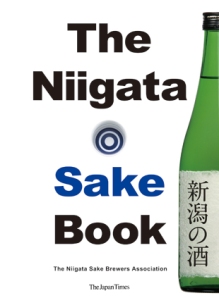
47. The Niigata Sake Book

The Niigata Sake Book, The Niigata Sake Brewers Association
89 pages, The Japan Times, 2008

Oh man, this was SO DISAPPOINTING. My region is supposed to have the best sake in Japan and I've always wanted to learn more about it, how it's made and the different varieties, so I thought this book would be really interesting. But the translation is total crap--the most irritating thing was the constant use of "gracious" as a way to describe sake flavor (dear translators, just because you are translating between two very different languages does not mean you can just make up new meanings for English words whenever you feel like it), but the whole thing was riddled with unclear statements and bizarre adjectives and "Unnecessary Capitalization and Quotation Marks." The writing style is also intolerably dry and technical, and the book is full of more puffed-up nonsense than actual information. I did manage to glean a little bit of knowledge about the brewing process and different sake classifications, but it wasn't anything that's not in the Wikipedia entry for sake, which is better written to boot. This does make me wonder about what's available in English--I think there's definitely a market for a well-written Sake 101 sort of thing.

12.27.2011

42. The Lake

The Lake, Banana Yoshimoto
Melville House, 188 pages, 2005, translated by Michael Emmerich in 2011

It's probably a function of language or translation or some combination of the two, but all the modern Japanese authors I've read--Haruki Murakami, Yoko Ogawa, Banana Yoshimoto, to some extent even Mishima--share certain qualities of style: extreme care and attention in describing discrete physical objects (a carton of milk in Murakami's Kafka on the Shore, grapefruit jelly in Ogawa's Pregnancy Diary, a wire grilling rack in The Lake), combined with a certain vagueness of feeling, told in a voice characterized by colloquialism and familiarity and a very Japanese measure of ambivalence (lots of "you know" and "well, I" and "that's just the way I feel"). I really love this style and it's probably part of why I can read any of the above authors writing about any damn old thing.


The Lake centers around the relationship between optimistic artist Chihiro and oddball grad student Nakajima. Chihiro is strong and independent, but in facing her mother's death comes to realize that she is still in a way trying to escape the small town she grew up in; she enters a tentative relationship with Nakajima, supporting him through his attempt to overcome childhood trauma. I wouldn't call it a brilliant plot--although Nakajima constantly alludes to a terrible secret that is revealed near the end of the book, nothing ever really happens--but Chihiro's inner world is so rich and detailed that there's always something to come back to, something more to explore and ponder. After this book I'm looking forward to reading more Banana Yoshimoto!

8.18.2011

Things that make me glad I live in Japan

500-yen ramen in flavors like tomato, curry, lemon shio and kimchi. Onsen. Words like "虫めがね" (magnifying glass, literally "bug glasses") and "爆発" (explosion). Tiny green frogs. Shiba inu. 100-yen stores. Bento boxes. Cell phone straps. Stumbling upon stone gods in hidden shrines. My students' faces. Yoneyama. Freshly planted rice fields reflecting the snow-covered mountains like mirrors. Ginkgo trees in the fall. Kotatsu. Nabe. Vending machines. Unsweetened iced green and jasmine tea. The ladies in my English conversation group. The moment of silence right after finishing a taiko song. Salmon onigiri, bibimbap onigiri, and yaki onigiri. The coast between Naoetsu and Nadachi. Tea ceremony. Trees right out of a Miyazaki film. Morning glories. Hydrangeas in colors I never even imagined. Crepe paper flowers on posters at school. The goofy pictures on city and ward signs. Sports day. Chorus festival. Military-style school uniforms. My apartment. Cheap tofu. The gnarled black branches of persimmon trees blooming with startling orange fruit. Pineapple chu-hi. Summer storms.

A summer morning in Japan

7:12 AM: Save tiny green frog from certain death on the spokes of your bike wheel. Bike 4 miles past rice fields to train station.

8:21 AM: Listen to earworm-y ring tone from a ten-year-old kid's keitai on the train. Spend the next 5 minutes trying to figure out what videogame it's from before realizing it's Gershwin.

8:35 AM: Stand in line at train station conbini and wonder whether "THE OOLONG-CHA" is a misuse of the definite article or a redundant, accentless use of the French "thé."

8:52 AM: Work Blog posts.

6.07.2011

Joetsu, one year later


It's that time again--JET placements are coming out, and in the next few days 11 lucky people will be frantically scouring the internet for information about Joetsu. I wrote this post a little over a year ago, before I came to Japan, and apparently it's come up in Google searches about Joetsu, so I figure this is as good a time as any to update those impressions now that I've been here almost a year.

(I also posted these pictures from Google Earth, which I now find hilarious because you know that "OMG, snow" picture of Takada? That's clearly beginning-of-winter snow. That's PUSSY snow. Two months later, shit gets real.)


Um... anyway, I may or may not continue to indulge in this kind of good-natured hazing, but the truth is that I love it here. I was more or less bang-on with my attempt to describe the layout in that old post: there's a town center (Naoetsu is north, Takada is south), and outside that, miles and miles of rice fields and some teacher housing. Joetsu itself isn't total inaka; there's a JUSCO, a Uniqlo, a movie theater, restaurants, a coffee shop, three McDonalds, a nice park, some okay bars (though the regular Saturday night crowd is nothing to write home about). There are also a ton of big box stores, which might surprise you if you've never been to Japan; apparently suburban sprawl and architectural eyesores are not unique to my homeland. It ain't San Francisco, but it has more or less everything you need.


And then there's the rest. There are still vast parts of it that I haven't explored (a project for an upcoming weekend, I think), but Yoshikawa, where I live, is a more or less typical example. It takes 30 to 40 minutes to get here from town. There are a few shops (conbini, pharmacy, gas station) within about 10 minutes' walk, and a bit farther out there's a 7-11, a sake brewery, and a nice little onsen with a restaurant (typical teishoku fare). There are two mountains, Yoneyama and Okamidake. The nearest supermarket is about a 10 minute drive away, in the next ward. Other than that, Yoshikawa consists entirely of rice fields. 


I probably haven't sold anyone on it with what I've said here, but Joetsu can be a great place if you let it. I was never a nature type before I got here but watching the changes in the rice fields throughout the seasons is an awesome thing (awesome as in "full of awe," not "totally tubular"). The mountains, the coastline, the snow--all of them are absolutely stunning. We're no more than an hour away from awesome snowboarding (by that I DO mean "totally tubular"), and Nagano City is a lovely little city (with real shopping, jazz bars, Starbucks, Thai food and a famous temple) that's about an hour and a half away by train. 

It has been a pretty intense year, but Joetsu has been good to me, good enough that I've signed up for another year. Bring on the snow!

2.07.2011

Setsubun and Chinese New Year

The road home at sunset. I didn't actually have this landscape in mind when I named my blog Sunset in Snow Country; I meant for it to refer to the Sunset District in San Francisco, where I lived for five years. I miss the pastel-colored houses and the dim sum shops and the ocean in constant view, and I feel as if I still carry it with me wherever I go. My life is a little piece of the Sunset in snow country, hence the name. So the picture doesn't have much to do with anything, but I still pulled over on the shoulder and jumped out of the car to take it. We don't see the sun much these days.

For the past two weekends I've been going to cooking classes sponsored by the international exchange network, which has ended up being really great. The first one was for a Japanese holiday called Setsubun. When I was a kid I had a book of Japanese holidays and traditions, and over the years I got to experience most of them in some altered form (the mall in Japantown does Tanabata trees every year, I went to an Oshogatsu event at the Japanese American National Museum last year, and of course there's the Cherry-Blossom Festival), but Setsubun was the one that never made an appearance in the U.S., and so going to the event had the weird effect of yanking me out of the commute-work-home cycle and reminding me that I am, right now, doing something that I've dreamed of since childhood. I'd say this happens about once every two weeks these days, and it's an amazing feeling.

Setsubun isn't really a major holiday; it's supposed to be the last day of winter (ha!), and the traditional ritual is to cast out demons by throwing beans. Apparently the Setsubun food we made, ehommaki (a long sushi roll), originated in Western Japan and has only made it to Niigata in recent years. But hey! I was in the newspaper!


If you can't read that, feel free to imagine that I am quoted saying something really cool and insightful and not "HURF DURF MAKING TAMAGOYAKI IS HARRRRDDDD."

Also, despite reading that Japan book over and over, I somehow failed to internalize the fact that people don't just toss beans around randomly on Setsubun. So I was completely surprised when the lights suddenly went out and Suzuki, the university student who did the presentation at the beginning, rushed in wearing a demon costume and roared at the kids, who screamed and pelted him with beans and candy.


Apparently someone in the household (usually Dad) will dress up as the demon and everyone else throws the beans at him. Most of the schools also did bean-throwing, and more than one of my ALT friends actually had to dress up as the demon and get mobbed by bean-throwing 12-year-olds. We just had do-it-yourself ehommaki for lunch:


You take the nori (at the back) and put the rice (it was sushi rice!) inside with whatever you want and roll it up. The choices are tamagoyaki, cucumber, cheese and a cold sausage. There's also miso soup with meatballs, tuna and corn salad, and milk. Believe it or not, this is about as good as it gets.

The most recent cooking class was making Chinese-style gyozas for Chinese New Year, which was great for several reasons. The first, obviously, is that I now know how to make and properly fold gyoza!


It turns out that most of the people there were Chinese exchange students at the local university. Japanese was the only language we had in common, so that's what we used. I got a lot of practice and met some cool people!

Now I'm looking at my notes for what I wanted to write about and wondering if I was on a food high from eating all those gyoza, but what the hell, I'll try. Since being in Japan, I've met people from Australia, England, Scotland, Ireland, Canada, Switzerland, New Zealand, Korea, and most recently Italy and China. Now, I'm from a very culturally diverse city, and at home I also met people of all national origins. But I recently read somewhere (I think it was a comment on Metafilter, of all places) that "Americans see all foreigners as potential Americans," and that really hit home. When I think about people back at home, particularly with my Asian friends, I sometimes have to think pretty hard to remember whether they were actually born in the U.S. or another country, just because everyone was sort of in various stages in the process of becoming American and it didn't really make much of a difference anyway. The most conspicuous foreigners I ever met were two white British guys in my newswriting class who, when we had an assignment to write about somewhere out of our comfort zone and the teacher nixed their plan to go to Hooters, moaned in their posh accents, "But we would NEVAAAHHH go to HOOTERS! It's so TACKY!" (Second place goes to all the French tourists who would pitch a fit because we didn't sell sweatshirts with the GAP logo on them. Seriously, get a life.) Here, though, most of my friends have never been to the U.S., and of course we're all on neutral ground, and living in Japan has suddenly thrust me into the realization that other countries are not just America with some history and funny customs tacked on as an afterthought. Because of these things I'm finding that I'm learning a lot more from them than I ever would have at home. 

Anyway, LONG POST IS LONG. Sunday deserves its own entry, so I think I shall end there.

3. Yasunari Kawabata: Snow Country

Snow Country, Yasunari Kawabata
Vintage International, 192 pgs., 1947, translated by Edward G. Seidensticker in 1957

You want to hear about snow country? Let me tell you about snow country. You know, in case you were wondering whether I was qualified to review a book about wasted effort and lots and lots of snow:


(all taken from the front of my house)

Now that that's out of the way, Snow Country. I'll be honest; I didn't like it. This was the book club book for January, and I also know a few other people around here who have read it in English, and all of us have the same opinion: something was definitely lost in translation. It's about the relationship between a geisha and a visiting Tokyo urbanite in Niigata Prefecture in the 1930s, and it was one of three novels for which Kawabata won the Nobel Prize, which I think is the reason none of us have just dismissed it outright. Not only is it critically acclaimed, it's also about the little corner of the world that we've chosen to call home. We want so badly to be proud of it, like we are of our sake and our rice and our Kenshin, but I just couldn't make myself like it. There are some beautiful images contained within it, but the story left me cold.

(See what I did there?)

In his Nobel Prize acceptance speech, Kawabata says this:
Yet in the sad, austere, autumnal qualities so valued by the tea ceremony, itself summarized in the expression "gently respectful, cleanly quiet", there lies concealed a great richness of spirit; and the tea room, so rigidly confined and simple, contains boundless space and unlimited elegance.
Kawabata's writing was heavily influenced by haiku poetry, which I think also shares the qualities which he here associates with tea ceremony--wabi-sabi, mono no aware, all those Japanese cultural ideals that have to do with transience and imperfection. I haven't spent much time reading or learning about haiku, but when I have read them (and other forms of Japanese poetry like the waka of the Kokinshu--all in translation, of course), I've generally found them to be pretty accessible, and I'm totally down with the idea of wabi-sabi.

Yet I still couldn't get into this. I think when it comes down to it, I just didn't find the characters compelling enough to invest the time and energy into exploring the book's relationship to haiku, which seems to be its main redeeming factor. The chronology of events was difficult to follow. I don't know a whole lot about geisha culture, which I'm sure impeded my understanding of the book. It was originally published in serial form, and parts of it were written much later than others, which gave it a choppy, non-continuous feel.

I have a hard time accepting cultural relativism in literature. A lot of people who read Snow Country in English seem to explain its impermeability by saying that it's just "too Japanese" to be accessible to the Western reader, but I hate that, and not just because it reeks of orientalism--I want to believe that if it's art, that it will resonate with the human experience no matter who you are or what time and place you come from. Maybe that's silly--I haven't read a whole lot outside of the Western tradition, and I don't have the energy or the desire to really spend a lot of time trying to find redeeming qualities in books that don't speak to me when there is so much else out there to read, so I may never find out whether it's a cultural divide or my own laziness that's the cause. I can say that I found The Sailor Who Fell from Grace with the Sea much more compelling, even though I didn't like its characters, either; the writing was much more consistent and I found the story absorbing in spite of myself.

Anyway, womp womp, can't like them all. I finished this quite some time ago and I've actually finished two other books since then, so those entries are coming up, I promise!

Next up: Guns, Germs, and Steel by Jared Diamond

12.12.2010

Maru and batsu.

Twice each year, across Japan, thousands of gaijin from all over the world converge on prefectural institutions and universities to sit the Japanese Language Proficiency Test. The test-takers are incredibly diverse--in my room of people taking the N4 (second to lowest out of 5 levels), there were people from the US, China, Vietnam, Indonesia, Korea, the UK, and India. The Japanese people fielding this sudden influx of foreigners are generally good-natured about it and take it in stride, and there are all kinds of helpful signs posted with furigana, English, and illustrations. Still, I have to wonder what particular nationality of gaijin the good folks at Niigata University had in mind when they felt the need to explain this concept:


On a tangentially related note, in my 23 years of experience fielding dumbass comments about my ethnically ambiguous appearance, this is far and away the winner: "No, no, you don't look that Japanese. I can easily tell that you're American, even before you talk. ....Oh, but I'm not saying you're fat or anything."

Never change, Japan.

8.21.2010

Exploring

I've been horrible about updating my blog, and it's been brought to my attention that half the people I gave the address to think it's broken because there haven't been any updates. Sorry! Today is the first day I've had completely to myself since arriving, I think. All the other ALTs went to the nearby island for a weekend festival. I'm all alone, with all the free time in the world and money in my wallet because I just got paid, and man does it feel goooooood.

First off, some everyday stuff.


This is where I live. I'm the house on the far right, with the car parked in front. The other three belong to other ALTs.

I don't want to post pictures of the inside until I've bought some more furniture and generally made everything look nicer, but I absolutely love the house--it has four rooms (entryway, kitchen, living room and bedroom), traditional Japanese-style, with sliding doors, shoji screens and two tatami rooms. 

This is the view from my front window--a rice field, a mountain and the neighbor's garden.

Some of the things I bought to brighten up the house when I got paid yesterday. I love the bunny glasses--so adorable and retro. And I am SO EXCITED about the little plants from the 100 yen shop. I will water them and love them and give them names. (Suggestions welcome!) The little green vase thing came with the apartment, and the paper Audrey Hepburn vase was a gift from Bri--she made it herself! (Thank you!)

To take advantage of my first free day in a month, I decided to go explore some random forest paths that I had noticed on my drive into town.

Path #1. This wasn't one of the ones I was originally intending to take--it's not really noticeable from the road, but it was right next to where I parked, so I walked down it for about 15 minutes before coming back to explore the others. There wasn't much along the way, but the forest was absolutely beautiful. I'm still really curious about where it eventually leads, so I'll probably be heading back at some point.

Path #2. This one went up the side of the mountain.

A shrine? A shack? I have no idea.

There are 33 somethings this way! But what could they be??? (On a side note, I miss being literate.)

Let's find out...

As I found out when I looked up the kanji on the sign back at home, they were 33 stone statues of Kannon, the goddess of mercy. Apparently the idea of Kannon having 33 forms is a common one in Japan; there are other sets of 33 Kannon statues, even within Joetsu. Definitely the coolest thing I've stumbled upon so far.


After that I took another path that connected to the one I was on. It only ended up leading to a graveyard, but it was a hell of a hike, so after getting some katsu curry I pretty much spent the rest of the day hanging out at home reading and getting some much-needed rest.

7.12.2010

New layout! (sort of)

If you're reading this on my blog's main page, you might notice a few differences. Hella Angeleno is now Hella 日本 (that's "Nihon" or "Japan" for the majority of you reading my blog), and the layout has changed! I'm not 100% sure about all this floral nonsense, but all the solid colors I tried made my blog look like the website for the historical society, so for now it stays. I suppose that is a risk of using this particular photo in the header... it's not exactly, you know, edgy. But too bad, I'm keeping it!

Speaking of the photo--it was taken sometime in the 1950s in Niigata, Japan. The lady on the right is my great-grandmother, Shige Sakuma. You can't tell from the cropped version, but in the original photo it's clear that she's the American visitor, with a nice bag and shoes. I have no idea who the other people in the photo are.

I don't know if any of you have read the book Everything is Illuminated by Jonathan Safran Foer (or seen the movie with Elijah Wood, which is probably more likely), but I suddenly find myself in the same position as the "hero" of that book. He's full of romantic visions of his family history; he steps off a plane in the country of his ancestors, with only a black-and-white photograph to guide him--and is immediately greeted by a flatulent dog and a guide whose English he can barely understand. No one is interested in his family; they just want to know if everyone in America is rich and has a giant penis, and require multiple explanations when he asks for a vegetarian dish in a restaurant (he ends up with potatoes). As crazy as it sounds, this is what I want--to bring my connection with Japan into the present, no matter how mundane or absurd the results. I'm not interested in lying to people about my "samurai ancestors"; I want to see rice fields.

(And rice fields I shall see. Hooray inaka!)

6.14.2010

Whenever I get a card from someone I haven't spoken with in a while, I can usually tell before I open it if my parents have already told them I'm going to Japan.


My aunt makes beautiful cards like this one by hand. I think I'm going to use the crane ribbon as a bookmark.


The package also included some stationery to keep in touch. First assignment: write to my dad to get him to stop laughing at my aunt.

Japan is becoming more and more real every day. I just received a welcome letter from the Joetsu Board of Education--including me, there are 8 new ALTs coming to the city this year and they haven't figured out our specific assignments yet, but they said it should come in the next week or so. Pre-departure orientation is in two weeks (on my birthday!), and I'll be putting in my two weeks' notice at work soon after that. I'm buying clothes for school and starting to think about packing. Everything is coming together.

5.29.2010

A couple more pictures of Joetsu

This is a street in the town center, Takada. Don't even try to tell me that this is not the most awesome goddamn thing you have ever seen in your entire life. I know you're jealous.

A shrine, also in Takada. From what I hear all the JETs in the area are a good 30-40 minute drive from Takada, but it's sort of a central meeting place.

This is on the beach toward Itoigawa, the next town south of Joetsu.

I found out that I'll be teaching at one junior high school, and probably also visit several elementary schools on a regular basis, which sounds pretty much perfect!

5.18.2010

Joetsu-shi, Niigata-ken (上越市, 新潟県)

(I copy-pasted that kanji from Wikipedia. Come on, you think I know how to write that on my own?)

I just received word of my placement on the JET program. I'll be in Joetsu, which is a city in Niigata Prefecture.


Niigata is the only prefecture I requested, and it's where my great-grandparents were born, so I'm super stoked! I'm not sure I really have a feel for what it's like yet, but these are some of the things I found out:

  • The "city" is really an amalgamation of various towns and villages that have undergone mergers to become one municipality. I can't seem to find a good map or photos, but I believe there's a central urban area and then some smaller villages with lots of nature and countryside in between. The population is just over 200,000, but the total area of the city is larger than LA, bringing the population density to 212 people per km². (For comparison, Folsom is 318/km²; San Francisco is 6,688.4/km².)
  • Niigata-ken in general is known for rice farming, excellent sake (made from the rice, duh), SNOW and onsens (hot springs). Joetsu-shi seems to be no exception.
  • Joetsu is about 2.5 hours from Tokyo by shinkansen. That becomes 5 or 6 hours when you take a regular train or bus. Shinkansen is pretty expensive but I'll be making a lot so maybe I'll be able to pop out to Tokyo for the weekend once in a while!
  • In addition to the summer fireworks festivals and springtime cherry blossom festivals (which are common to most places in Japan), Joetsu hosts a Lotus Festival, a sake festival, a firefly festival and a snow candle festival. 
  • There are also temples, castles, an aquarium and a planetarium. It sounds like there's a lot to do!
I still haven't gotten in contact with my predecessor and may not hear from them for several more weeks, so all the specifics of my situation (apartment, rent, car) are still up in the air. Chances are I'll be teaching middle or elementary school, though.

Here are a few extra links:

Joetsu city English website
Joetsu tourism guide
Joetsu region guide on the Niigata JET page
Joetsu Wikipedia entry

5.15.2010

Word nerd

The books I plan on bringing to Japan:

1. Strunk and White- The Elements of Style. Not so much because I think I'll really need it to teach English to Japanese high school students; more so because my identity depends upon being the kind of person who carries her Elements of Style everywhere, even to Japan. Also, it's very small and portable.

2. Lawrence LeShan- How to Meditate. Also portable, and in Japan I'm going to, like, be totally spiritual and stuff.

3. Vladimir Nabokov- Speak, Memory. This is probably going to be my main reading material for the flight, orientation, travel to my prefecture, and first few weeks before I figure out how to acquire other books in English (and, um, get internet). I'm not sure it will last me that long, so I'm thinking about bringing one more just in case. I originally wanted to bring War and Peace but I have so many unread and half-read books laying around, and since I already have so many to choose from I really think that ten dollars would better be spent on dinner or nomihoudai or, like, rent. But none of my current titles seem appropriate. Maybe A People's History of the United States?

5.03.2010

JAPAN JAPAN JAPAN

A little over a year ago I was browsing Facebook and came across a photo album by an acquaintance from high school who I never talk to. His younger brother was leaving on study abroad for Japan, and there were pictures from goodbye parties and airport photos, and I suddenly realized that every single time I heard about someone leaving on study abroad--but especially if it was a Japanese American friend going to Japan--I felt incredibly, incredibly jealous. I'm a little embarrassed that instead of having a more positive reason, I basically decided to go to Japan for fear of feeling this way every time someone mentioned going abroad for the rest of my life, but that was when I started looking into study abroad options. When it turned out that the Japanese programs didn't work very well with my major and minor, I found out about JET, waited, applied, and a year later here I am.

(Pro tip for those applying next year: You will have a story like this too. Don't put that crap in your application essay because no one at the embassy gives a shit. Save it for a blog post when you get in so your friends and family can act like they care.)

So most of you know by now that I've been accepted to the JET (Japan Exchange and Teaching) Program and am going to Japan on July 25, in a little under three months. I don't know yet where I am going, what grade level I'll be teaching, whether I'll be driving or what my housing will be like (though I know I'll live alone). I do know that my airfare to Japan will be paid by JET, that I'll spend three days at orientation in Tokyo before traveling by bus, train or plane to my future home, and that I'm going to meet some fucking awesome people who went through every step of this crazy process with me in person for the first time. I also know what my pay will be, and let me tell you I am less stressed now than I have been since I was laid off from my office job while still in school.

I'll remain Hella Angeleno in spirit, but I'll have to think of a new name for my blog while I'm in Japan. I seriously considered "Not a White Guy in Japan," but I think that may have seemed like a much better idea after three beers.